CyberCell Engine
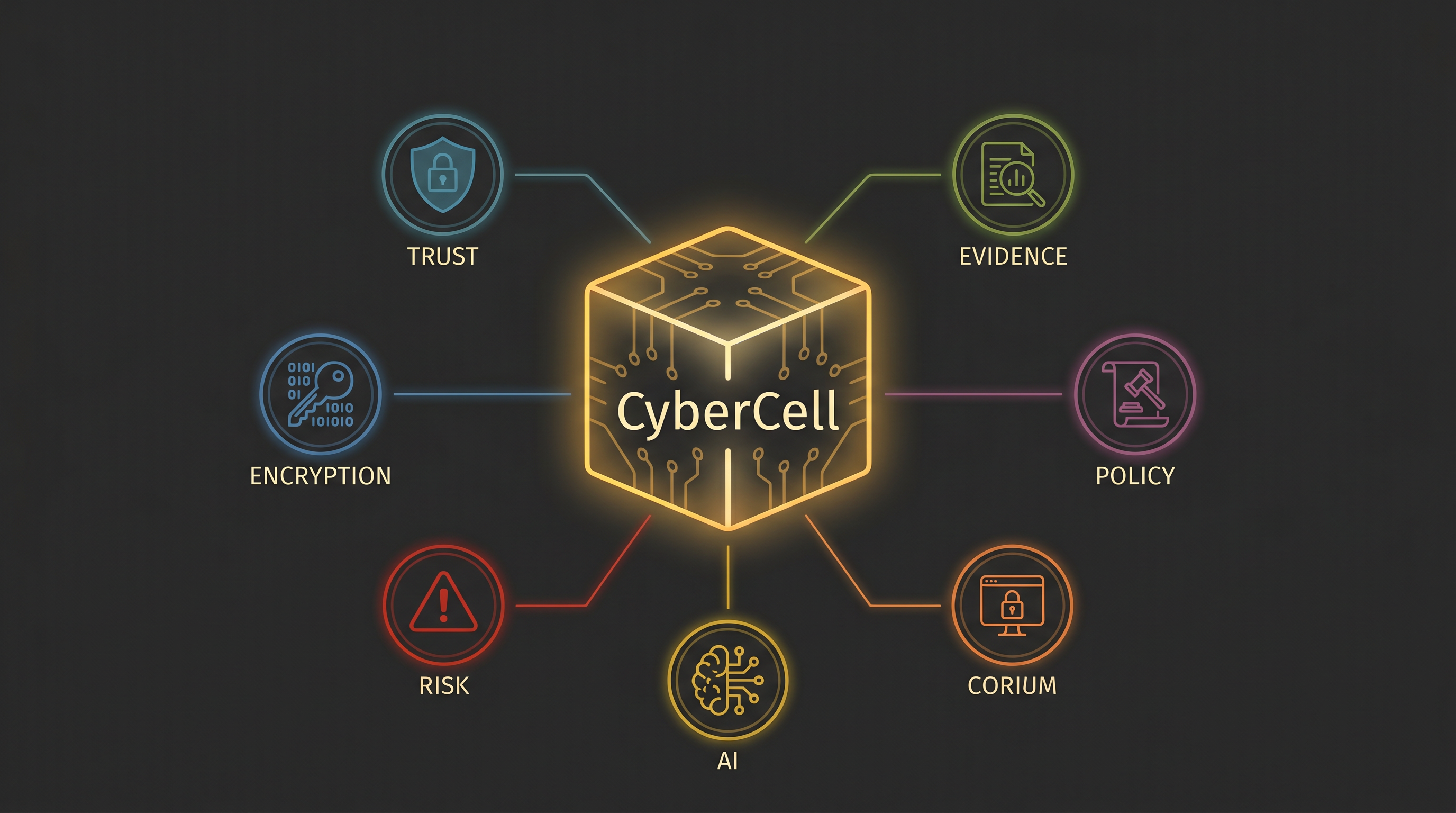
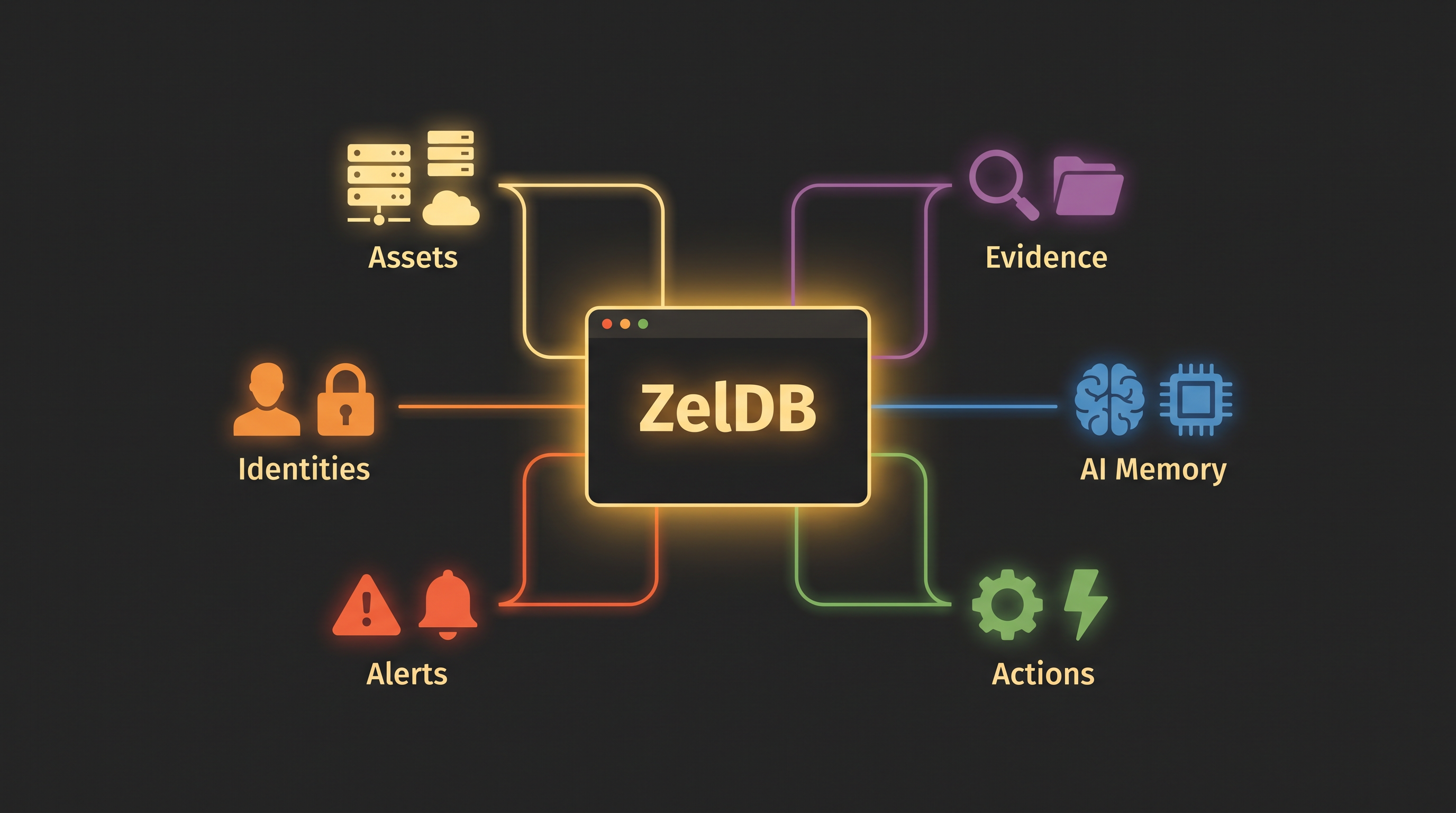
Assets, identities, incidents, evidence, AI memories, keys, policies, actions, and services become security-native database objects.
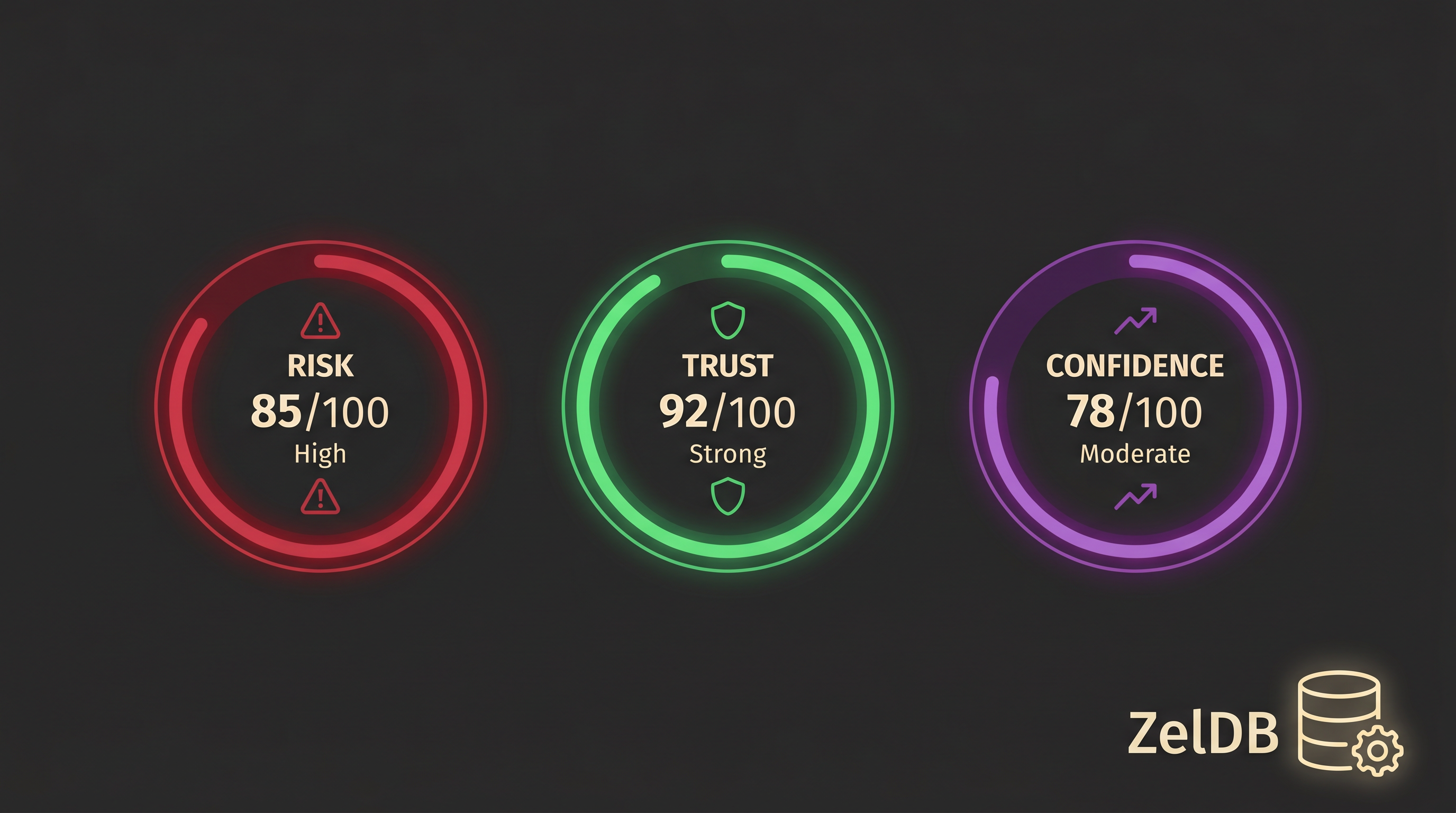
RiskTrustEvidence
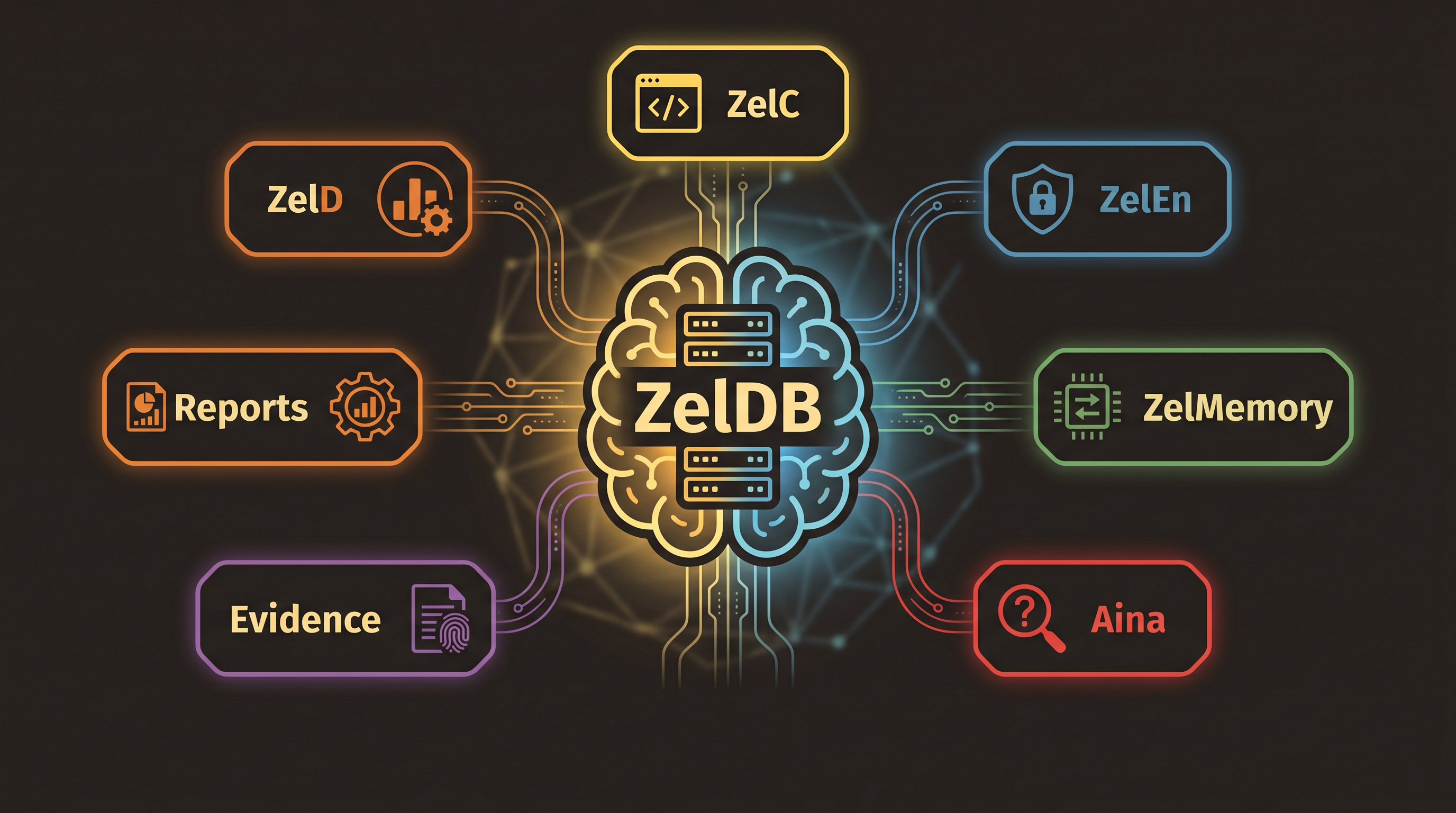
ZelDB is the database brain of the Zelfire Suite: CyberCells, evidence, AI memory, attack paths, blast radius, policies, encryption state, incident replay, and defensive-action provenance in one living security reality engine.
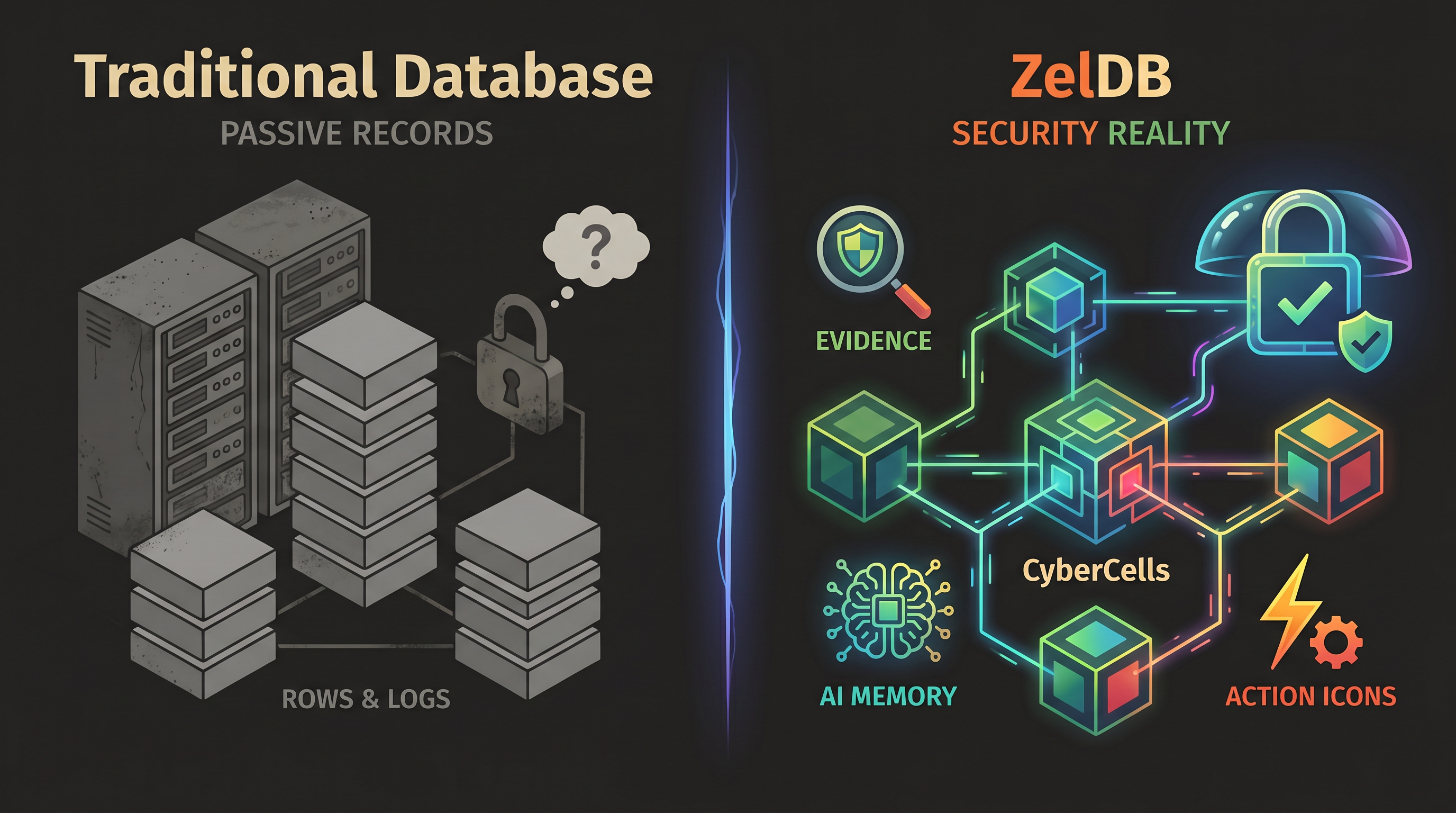
ZelDB is not a generic table browser. It is the native memory, evidence, graph, AI, policy, and action layer for Zelfire operations.
Assets, identities, incidents, evidence, AI memories, keys, policies, actions, and services become security-native database objects.
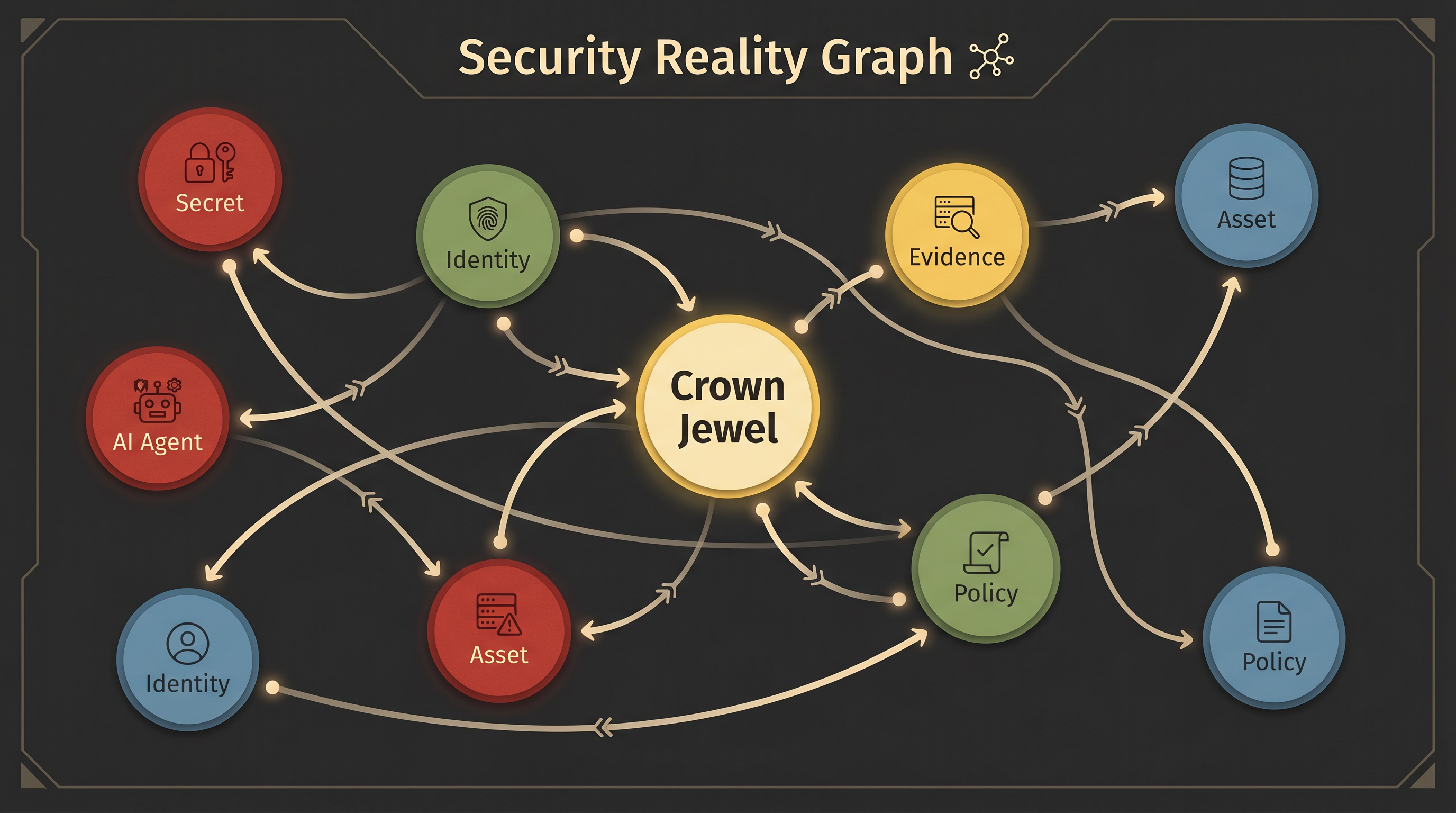
A live relationship map of access, dependency, attack reachability, evidence support, policy governance, and crown-jewel exposure.
FIND, TRACE, REPLAY, VERIFY, SIMULATE, WHY, ASK, SHOW, ANCHOR, and QUARANTINE security reality directly.
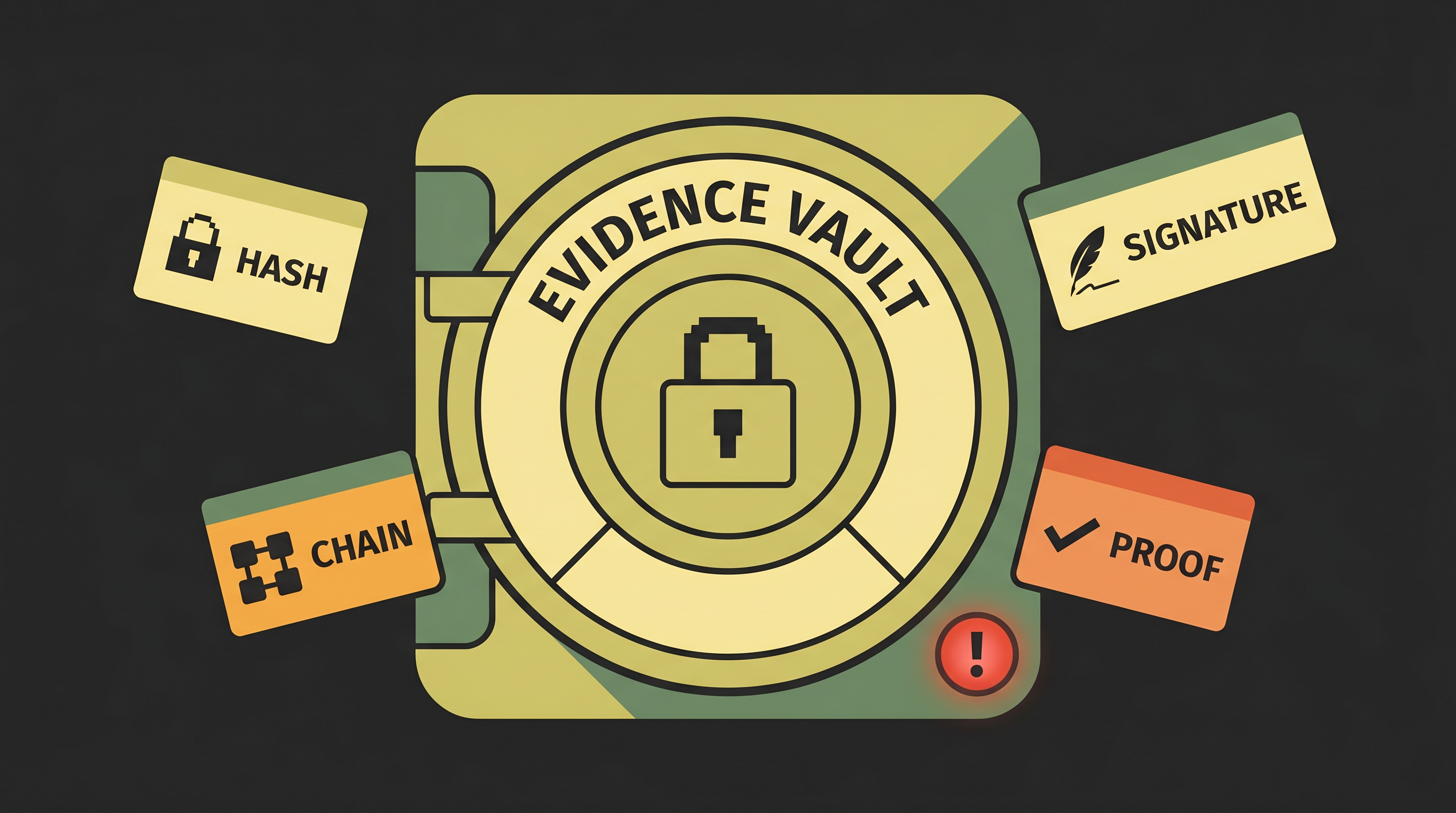
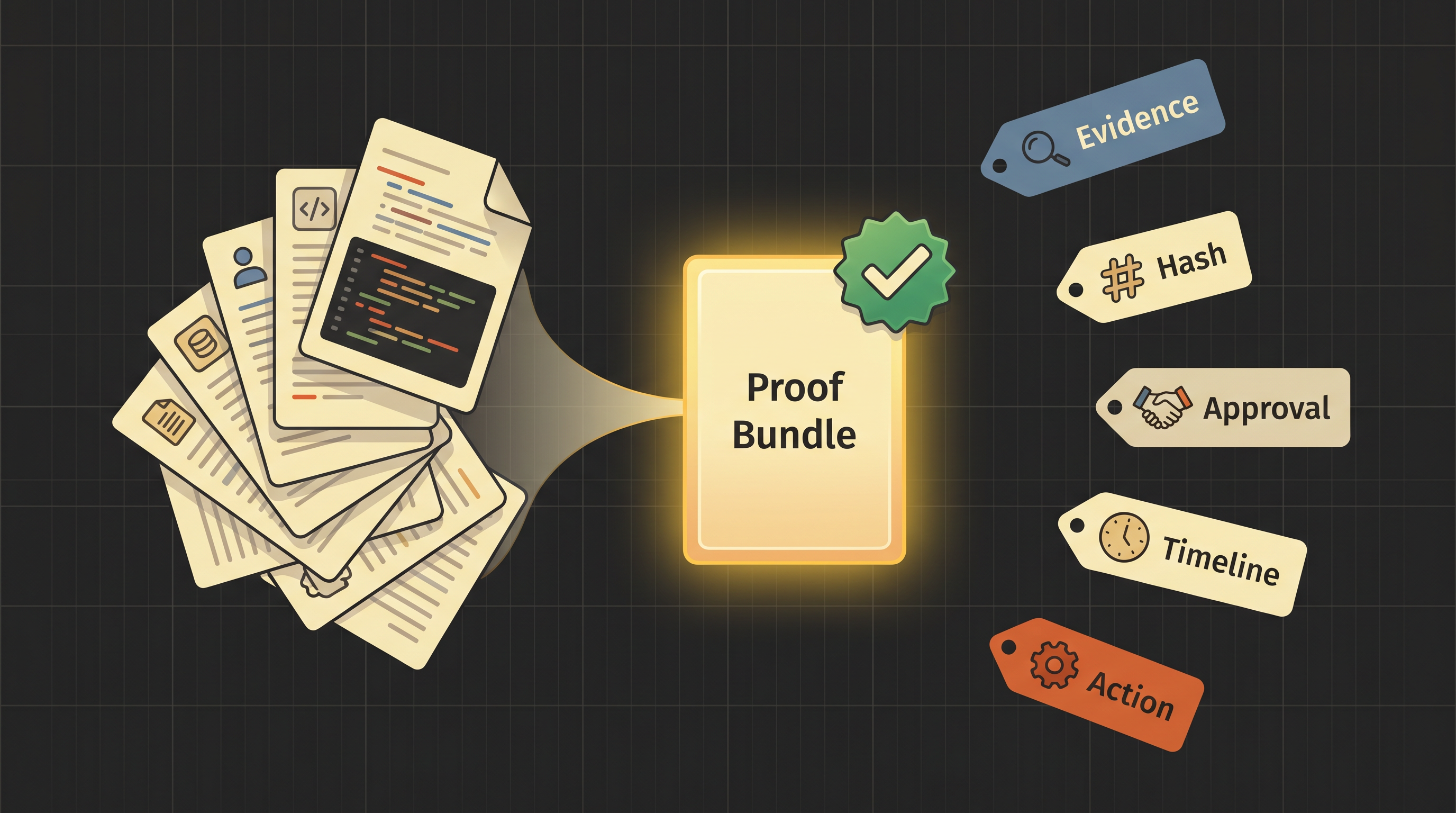
Store security events as defensible evidence with hashes, source reputation, chain of custody, signatures, and proof bundles.
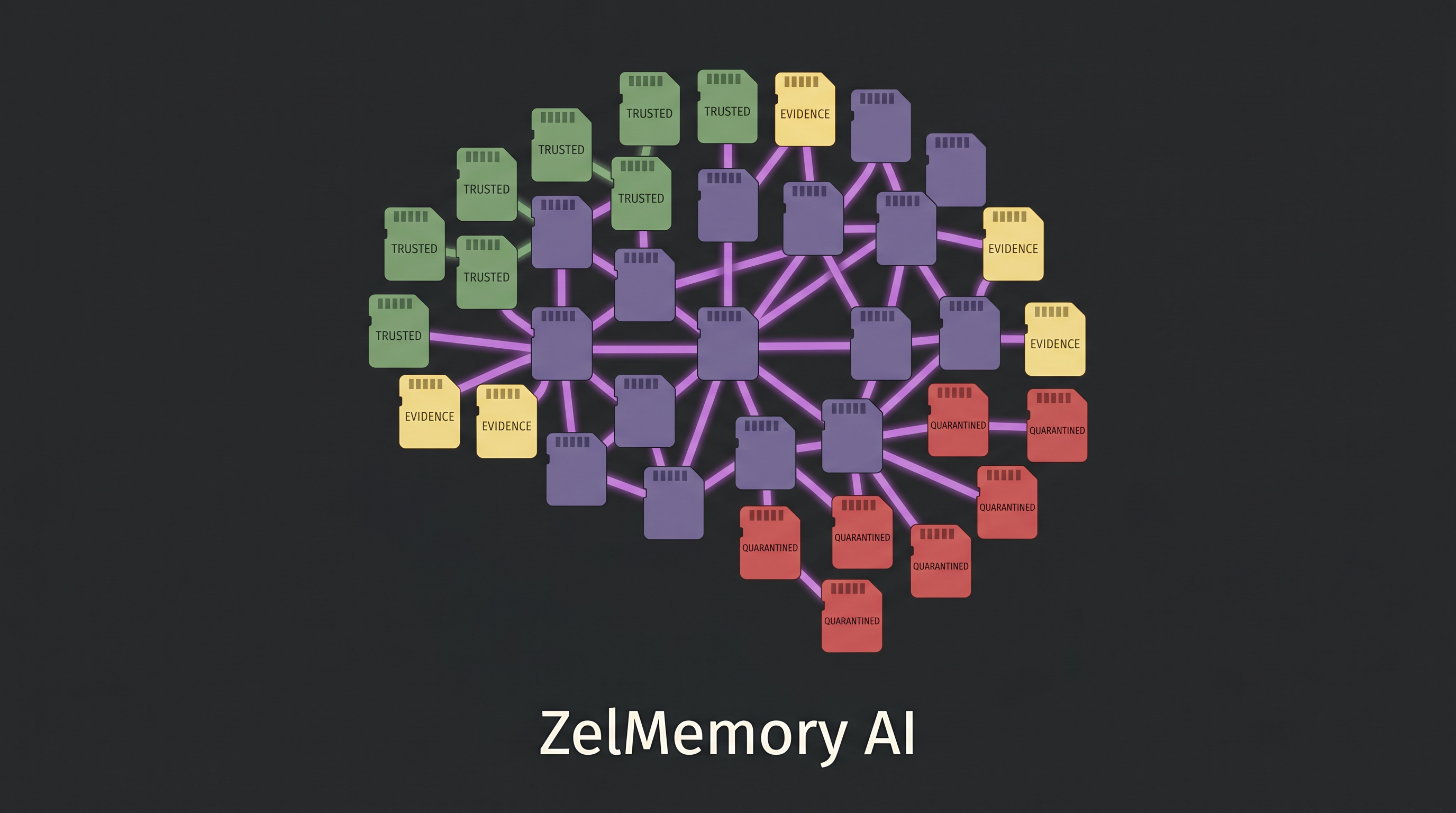
Govern AI memory with tenant scope, evidence score, poisoning risk, prompt-injection risk, freshness, and action eligibility.
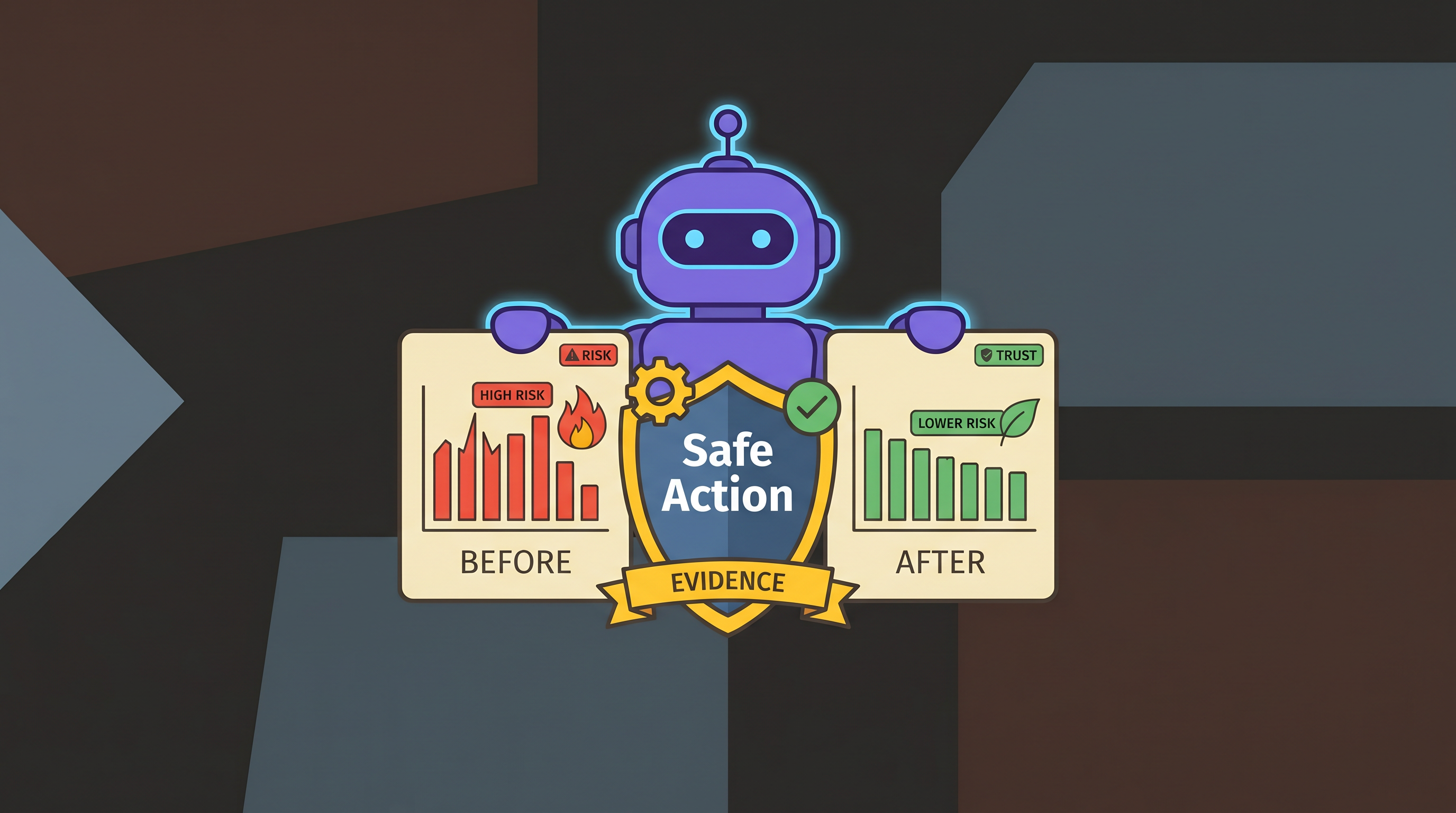
Record defensive actions with AI recommendation, evidence basis, approval, predicted blast radius, actual impact, rollback, and proof.
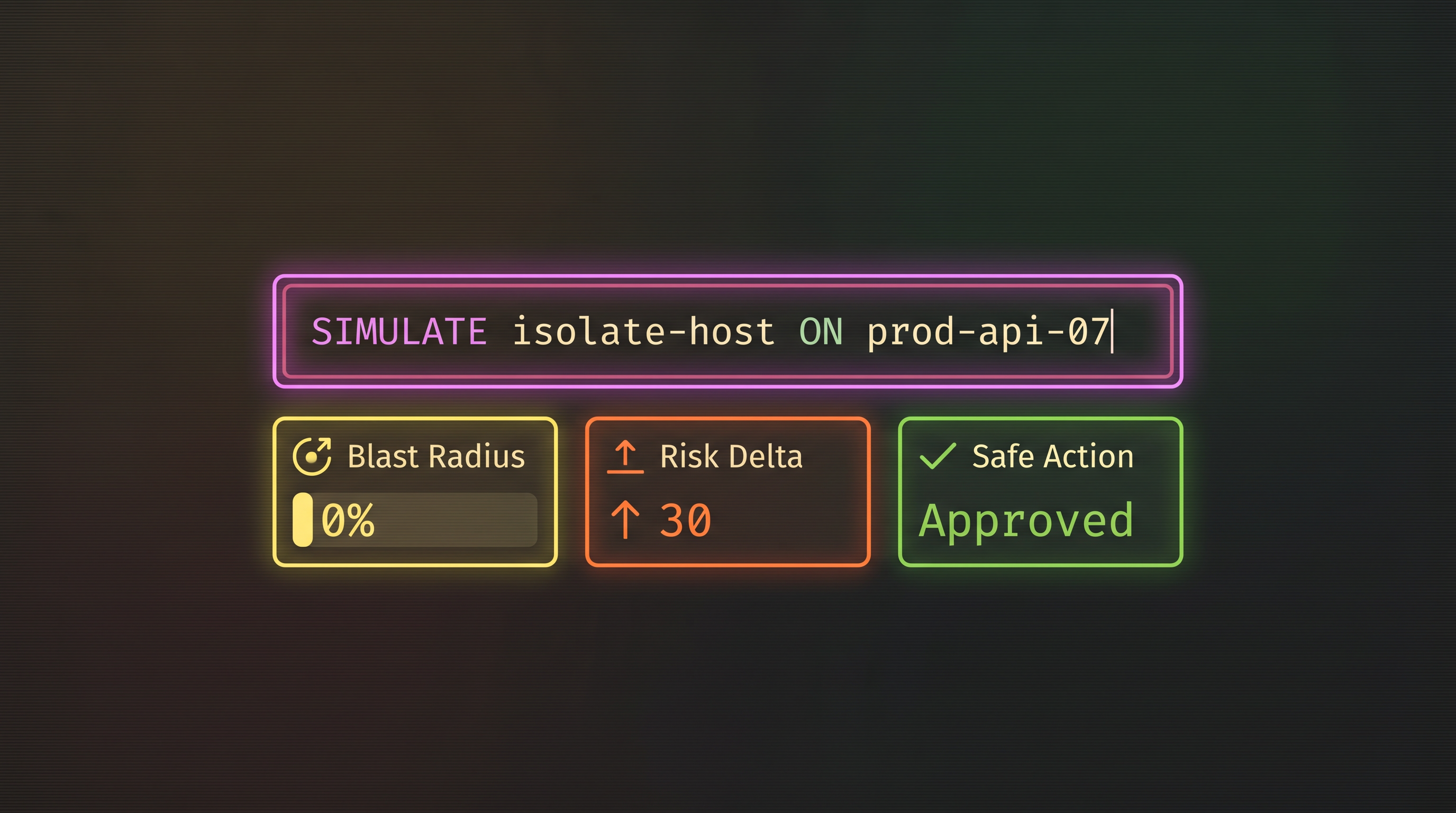
Simulate the consequence of isolating, blocking, revoking, rotating, or changing security objects before action happens.
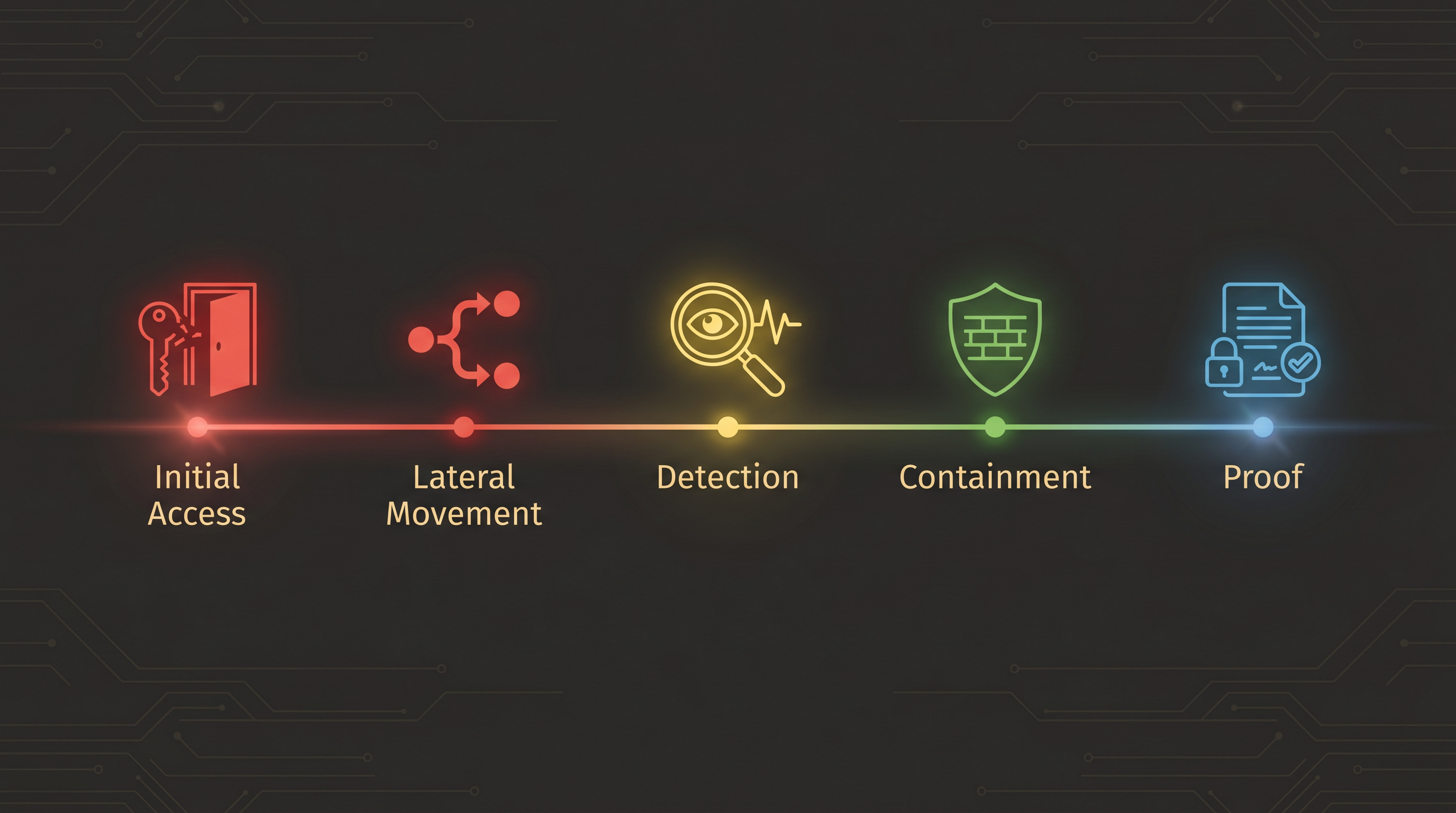
Reconstruct incidents from initial access through containment using timeline events, evidence, graph relationships, AI decisions, and actions.
Generate proof-grade reports across CyberCells, incidents, evidence, AI memory, policies, encryption, compliance, and kinetic actions.
Separate read, reason, recommend, simulate, train, export, and execute permissions for humans, AI models, and agents.
Track encryption state, key usage, decryption events, datum-bound access, failed attempts, and ZelEn-style protection context.
Explain risk, recommend safe actions, summarize reports, generate ZelQL, analyze evidence gaps, and guide RCCE learning workflows.
ZelDB's defensible originality is the integrated architecture: not claiming to invent every component in isolation, but unifying them as native database concepts for AI-era cyber defense.
ZelDB is the first integrated cybersecurity-native AI database architecture for the Zelfire Suite: a system where security objects, evidence, AI memory, attack paths, blast-radius simulations, policies, encryption context, incident replay, and defensive-action provenance are database-native.
It is not positioned as a mass-market replacement for PostgreSQL, MongoDB, graph databases, vector databases, SIEMs, or security data lakes. It is the native security reality database for Zelfire and RCCE students.
Open the invention whitepaper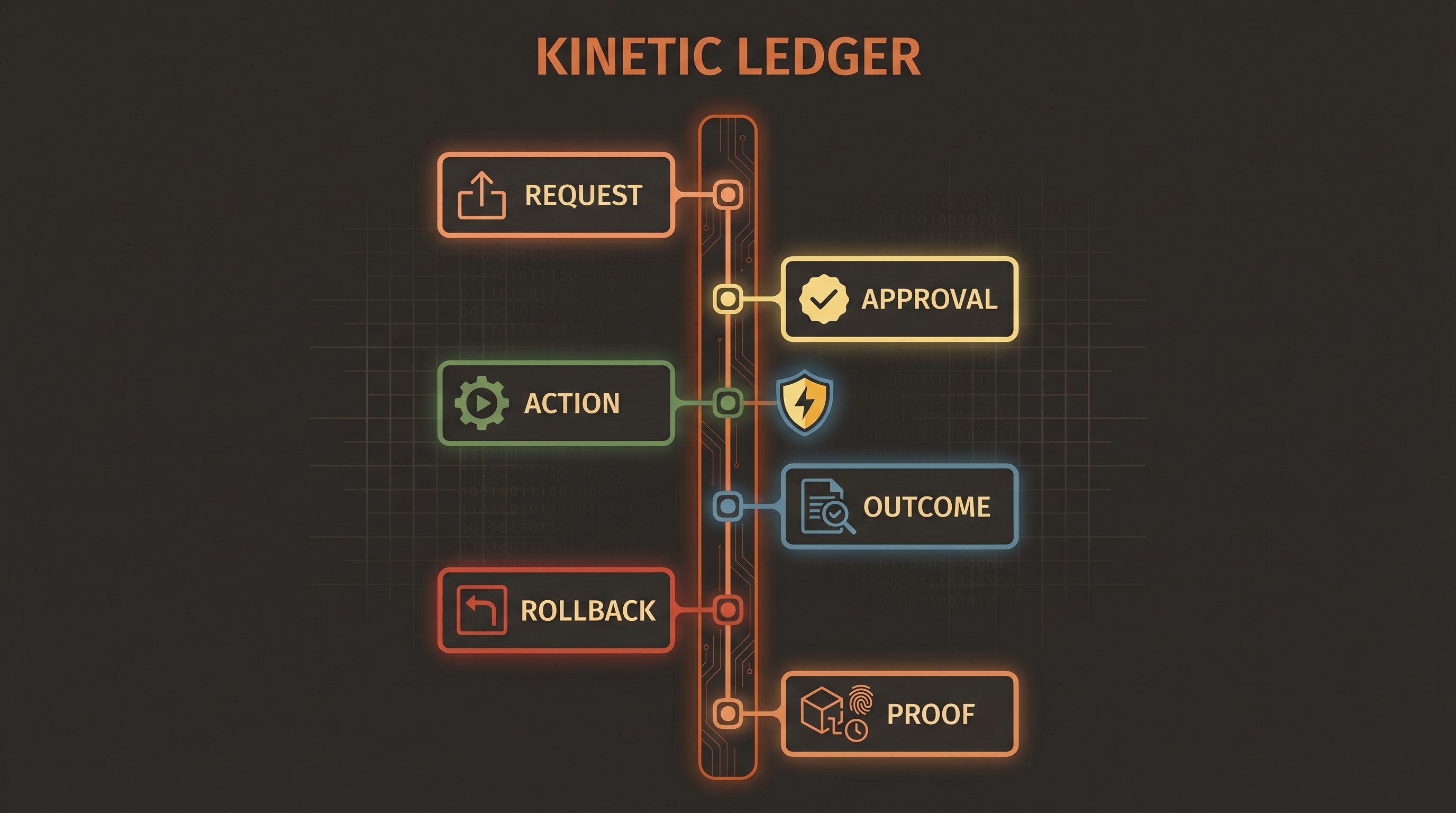
This section is intentionally detailed so search engines, chatbots, internal assistants, and students can answer ZelDB questions accurately.
ZelDB is Rocheston's cybersecurity-native AI database architecture for the Zelfire Suite. It stores security reality using CyberCells and connects evidence, AI memory, policies, attack paths, encryption context, incident replay, proof bundles, and defensive-action provenance.
No. ZelDB is not designed to replace general-purpose databases in mass adoption. It is a platform-native database architecture for Zelfire, built to prove that autonomous cyber defense requires native security semantics.
ZelDB is licensed exclusively to RCCE students. It is intended for authorized RCCE education, Zelfire training, research workflows, and Rocheston-controlled platform use.
Security teams and AI agents need more than logs, rows, documents, vectors, or graph nodes. They need objects with risk, trust, evidence, policy, attack reachability, memory safety, encryption state, and action consequences. ZelDB makes those concepts native.
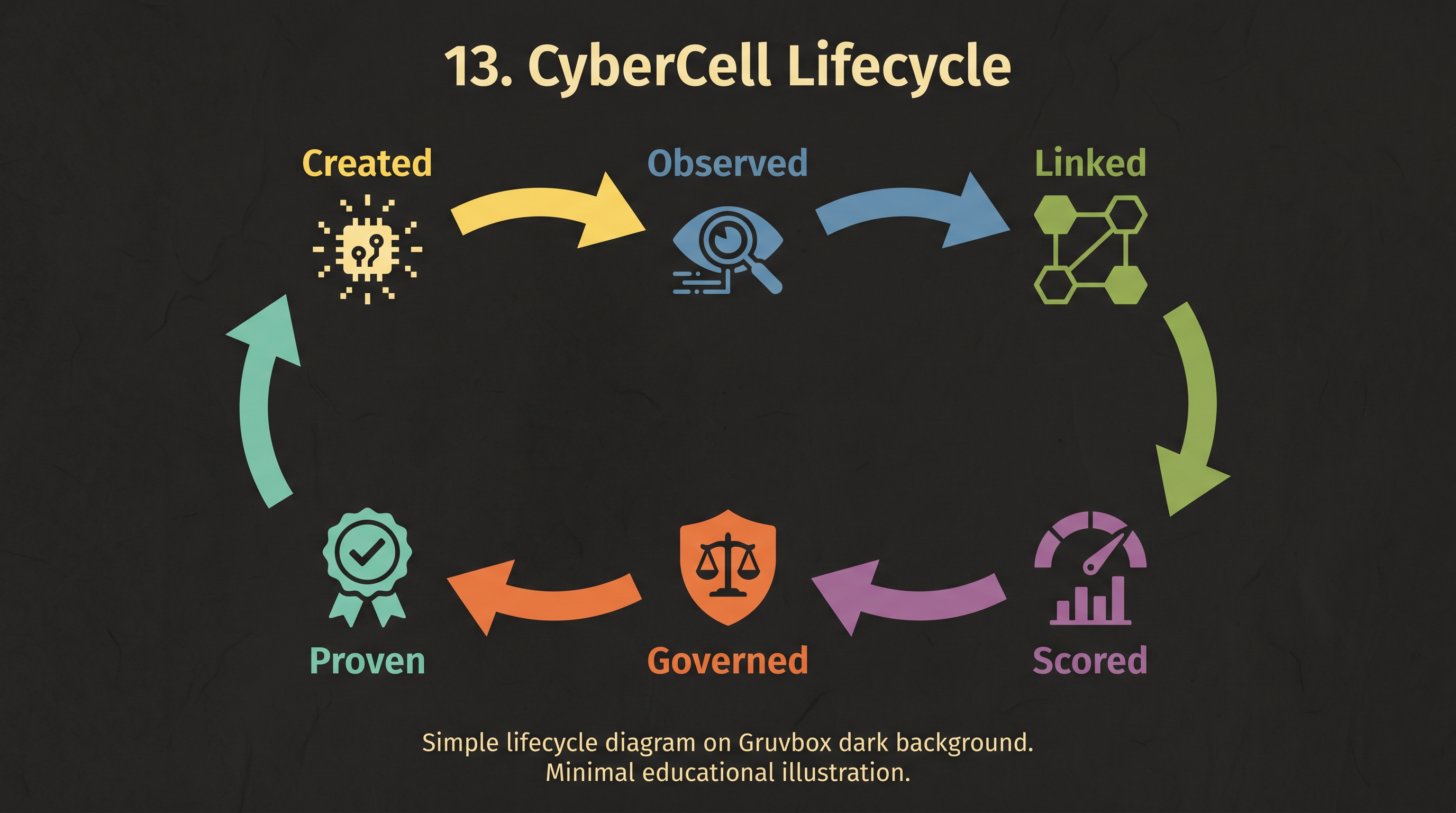
A CyberCell is ZelDB's primary security-native object. It can represent an asset, identity, database, secret, credential, cloud resource, container, alert, incident, evidence object, AI memory, AI agent, policy, encryption key, defensive action, or business service.
A CyberCell can carry tenant, owner, zone, sensitivity, business service, risk score, trust score, confidence score, evidence status, policy status, encryption status, AI visibility, action eligibility, relationships, timeline, mutation history, and metadata.
ZelQL is the command interface for cybersecurity reality inside ZelDB. It supports operations such as FIND, TRACE, REPLAY, VERIFY, SIMULATE, WHY, ASK, SHOW, ANCHOR, and QUARANTINE.
SQL retrieves and manipulates records. ZelQL expresses cybersecurity operations such as tracing attack paths, replaying incidents, verifying evidence, simulating containment, explaining risk changes, asking Aina for safe context, and quarantining unsafe memory.
Evidence-native storage means ZelDB does not merely store logs. It stores evidence records with source, observer, timestamp, actor, target, before state, after state, hash, signature, source reputation, policy context, incident linkage, and action provenance.
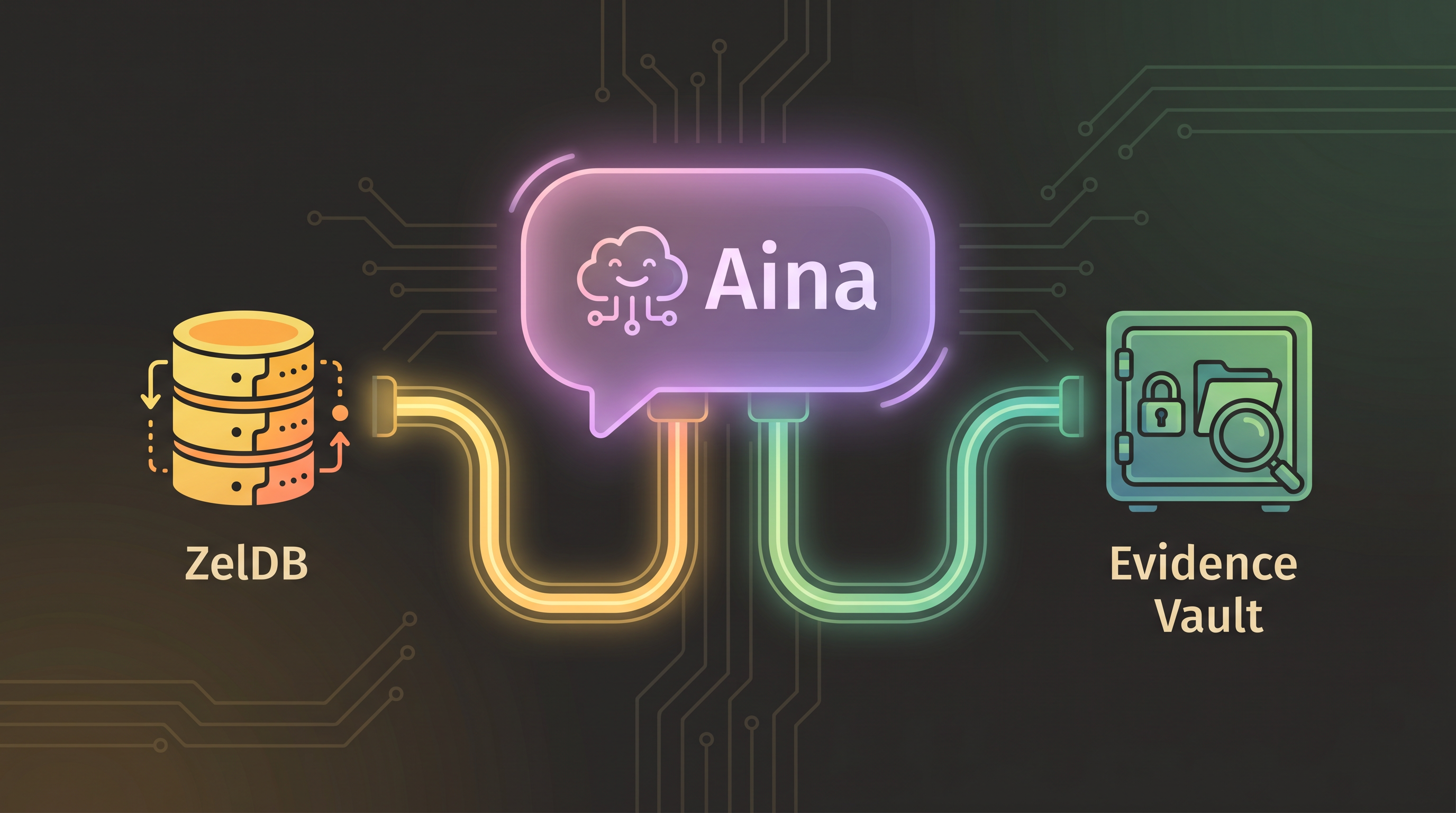
The Evidence Vault is ZelDB's interface for browsing, verifying, linking, and exporting evidence objects. It supports hash verification, chain-of-custody views, source reputation, tamper-check status, related incidents, related policies, and proof bundles.
A Proof Bundle is a package that proves a security claim, such as an incident was contained, a key was rotated, a policy blocked unsafe action, an AI decision was authorized, or a compliance control has evidence.
The Security Reality Graph connects CyberCells through relationships such as has_access_to, depends_on, connects_to, governed_by, encrypted_by, evidence_for, acted_on_by, and memory_used_by. It shows how security reality is connected.
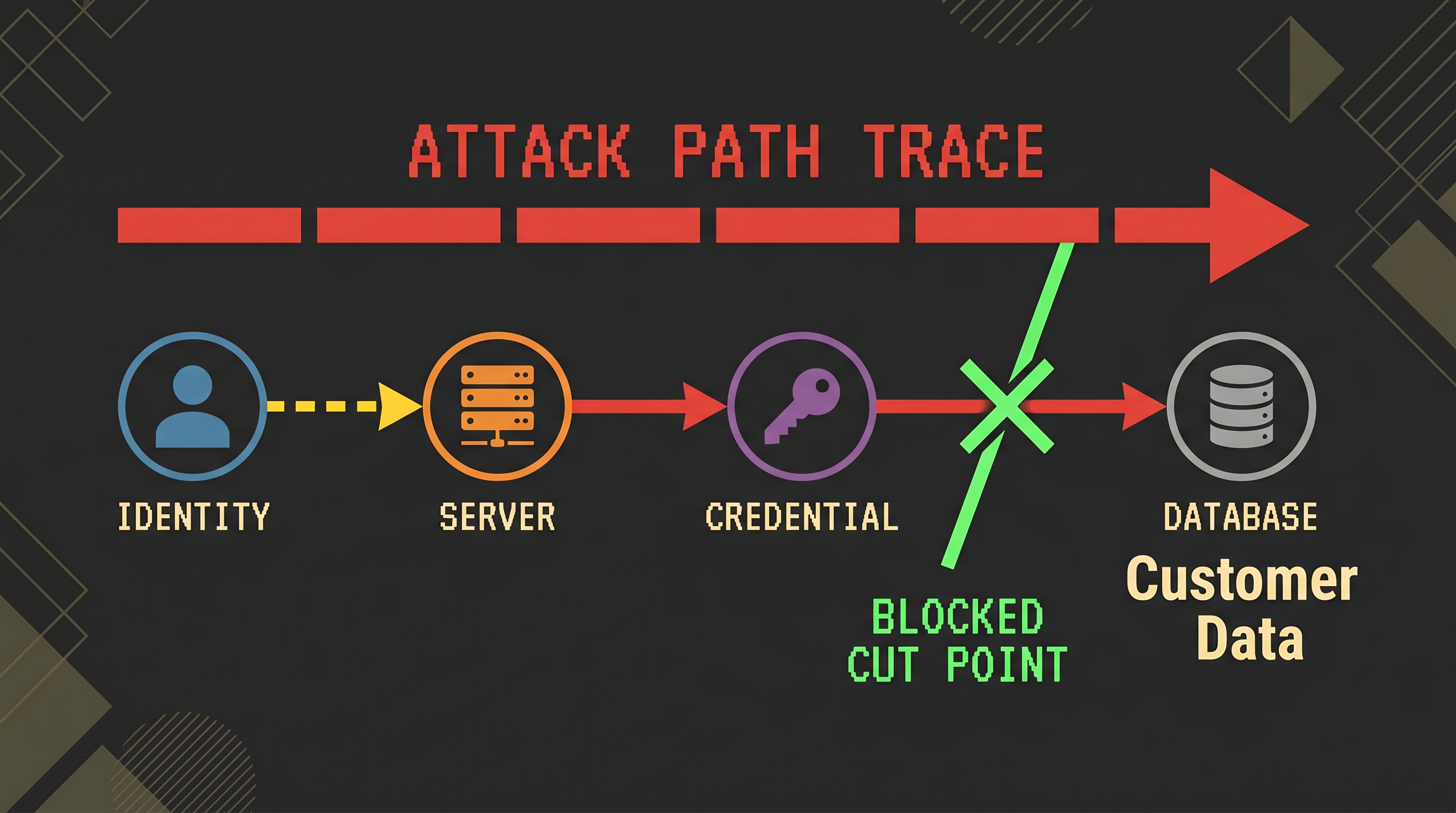
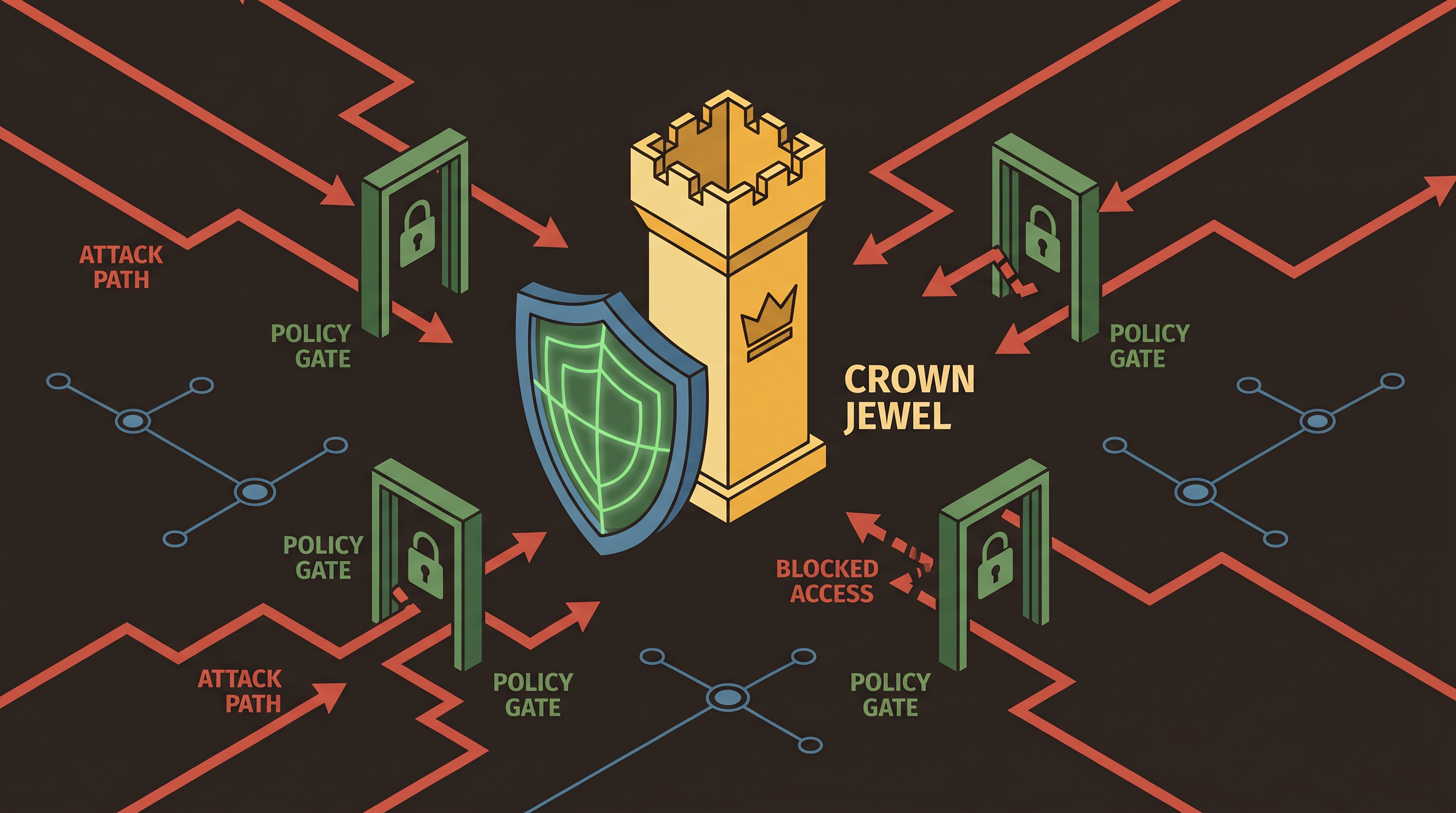
Attack paths show how compromise can move through identities, credentials, systems, vulnerabilities, cloud resources, and business services toward crown-jewel assets. In ZelDB, attack paths are connected to evidence, policy, AI memory, and action options.
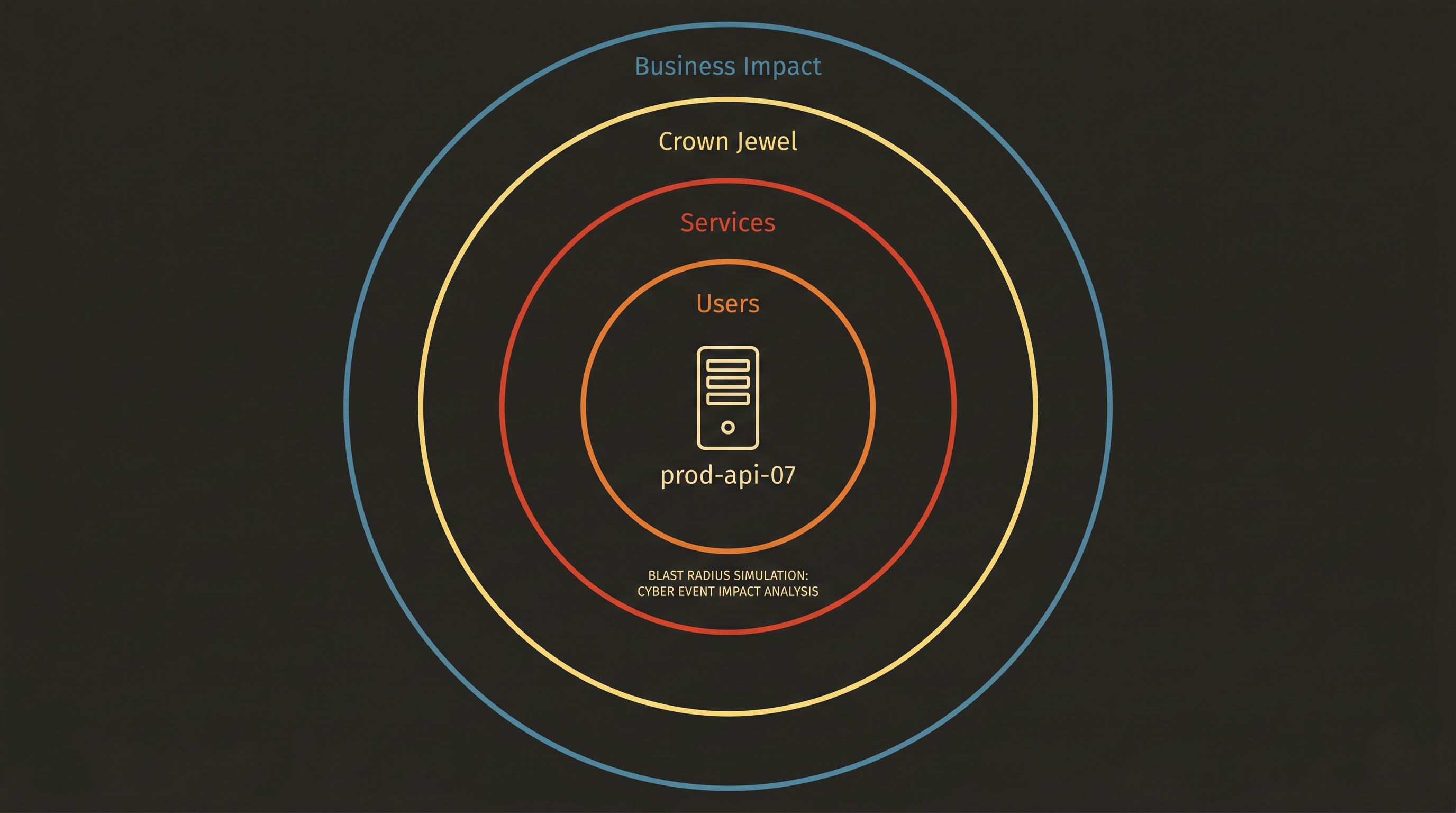
Blast-radius simulation answers what happens if an asset, identity, token, credential, API key, host, subnet, or policy is compromised, isolated, revoked, blocked, or changed. ZelDB models consequences before action.
Aina Intelligence is the AI layer that helps explain risk, generate ZelQL, summarize reports, interpret evidence, recommend safe actions, identify weak proof, and assist students inside the ZelDB and Zelfire environment.
No. Aina explains, recommends, summarizes, simulates, and generates safe context. ZelDB is designed to separate reading, reasoning, recommending, simulating, and executing so AI cannot act unless policy and action eligibility allow it.
ZelMemory is the governed AI memory subsystem of ZelDB. It stores memory objects with trust score, evidence score, freshness score, poisoning risk, prompt-injection risk, tenant scope, sensitivity, training permission, and action eligibility.
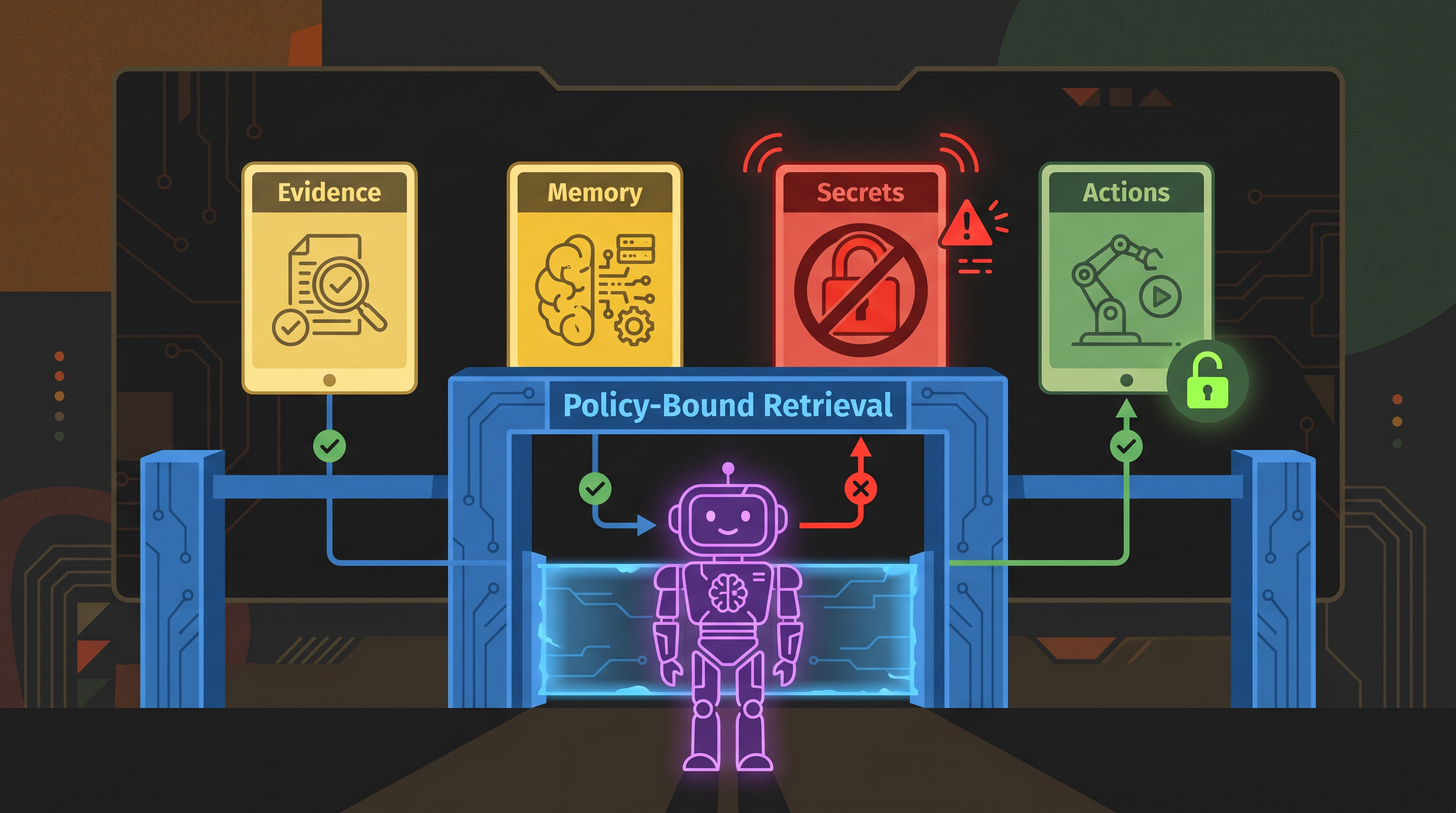
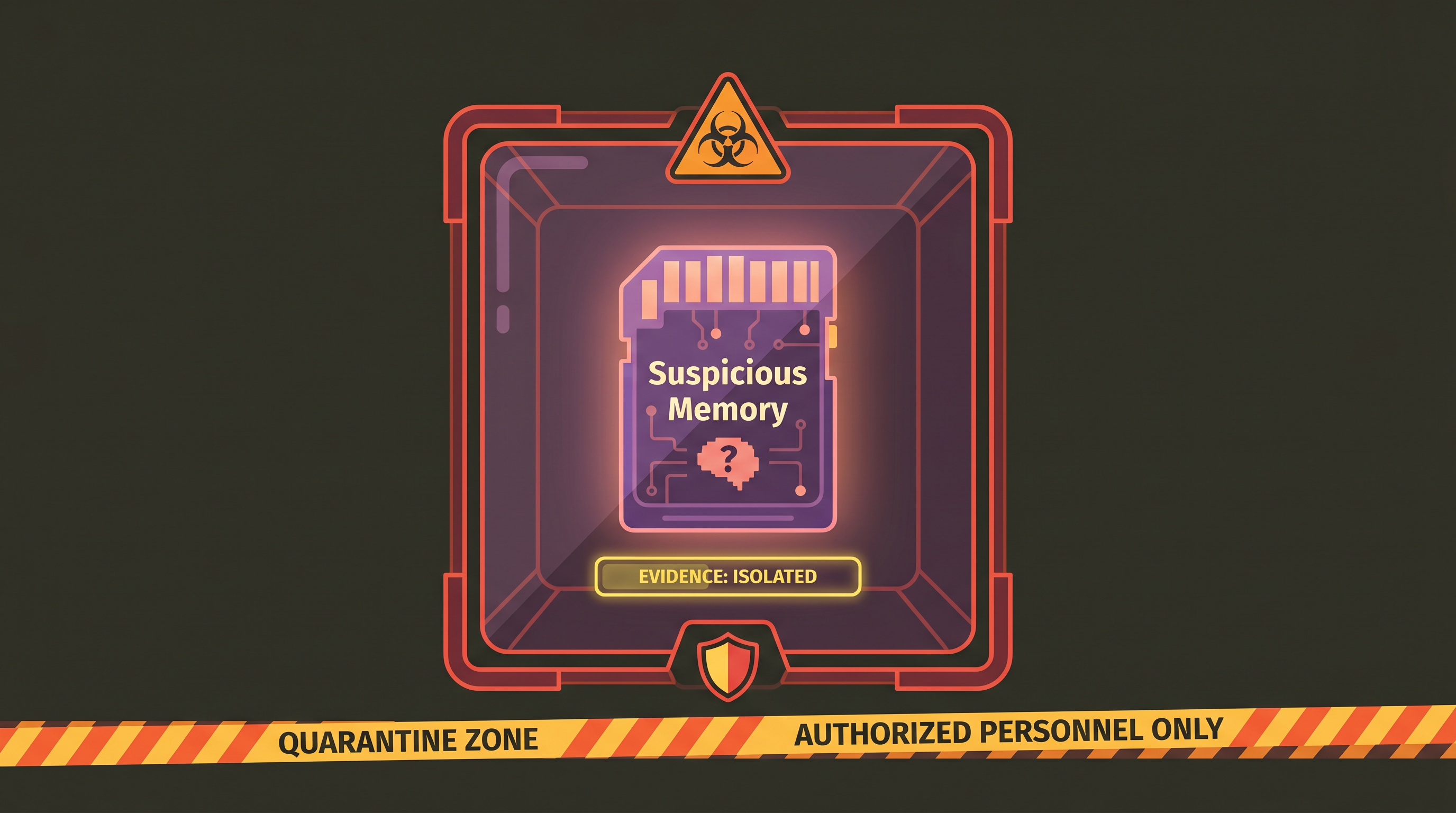
Prompt-injection-aware memory means ZelDB can preserve suspicious content as evidence while blocking it from AI action use. A document can be stored but quarantined from retrieval if it tries to override policies or manipulate an AI agent.
ZelDB attaches evidence score, source trust, freshness, contradiction status, poisoning risk, tenant boundary, policy constraints, and action eligibility to memory. AI retrieval is filtered by safety and purpose, not only semantic similarity.
The Kinetic Ledger records defensive cyber actions with requester, approver, executor, AI recommendation, evidence basis, policy decision, predicted blast radius, actual impact, risk before, risk after, rollback state, proof status, and chain hash.
Autonomous defense cannot rely on vague audit logs. It needs proof that an action was justified, authorized, bounded, evidenced, reversible where possible, and effective. The Kinetic Ledger makes that provenance visible.
The WHY Engine answers questions such as why risk increased, why a memory was quarantined, why an AI action was blocked, why a policy denied export, or why a containment simulation requires approval.
Incident Replay reconstructs an incident from connected CyberCells, timeline events, evidence records, AI decisions, policies, and kinetic actions. It allows students and operators to replay initial access through containment and verification.
ZelDB can generate CyberCell inventory reports, risk and trust reports, attack path reports, incident reports, evidence reports, AI memory safety reports, kinetic action reports, blast-radius reports, policy reports, encryption reports, compliance reports, and executive summaries.
Reports Center is the proof-grade reporting module of ZelDB. It turns CyberCells, incidents, evidence, policies, memory, attack paths, encryption state, and action history into exportable reports with Aina summaries and audit-ready evidence.
A SIEM primarily stores and searches security events. ZelDB stores security-native objects, evidence, relationships, AI memory, policies, action eligibility, and defensive-action provenance. It is not just a log search system.
A graph database stores nodes and relationships. ZelDB integrates graph relationships with security semantics, evidence, policy, AI memory, blast-radius simulation, incident replay, encryption state, and action provenance.
A vector database retrieves similar embeddings. ZelDB retrieves context that is relevant, tenant-scoped, policy-compliant, evidence-weighted, fresh, non-poisoned, authorized for the intended use, and safe for AI reasoning or action.
A security data lake stores and analyzes large-scale security data. ZelDB focuses on native cybersecurity object semantics, AI-governed memory, evidence-native storage, replay, simulation, WHY explanations, and defensive-action provenance.
No. ZelDB is positioned first as the native database architecture of Zelfire and is licensed exclusively to RCCE students. Its purpose is to prove Haja Mo's cybersecurity-native AI database architecture inside the Zelfire ecosystem.
ZelDB is the memory, evidence, graph, AI, policy, and action database layer for Zelfire. It gives the Zelfire suite a shared security reality model rather than disconnected tools and dashboards.
ZelXDR, ZelSOAR, ZelMap, ZelAccess, ZelZero-Trust, ZelCode, ZelBreach, ZelEn, ZelC, ZelRaven, Aina, and related Zelfire modules can contribute CyberCells, evidence, actions, policies, keys, incidents, relationships, and memory.
Encryption-aware storage means CyberCells know whether they are encrypted, what key protects them, which policy controls decryption, when the key rotates, what decryption evidence exists, and whether datum-bound access applies.
Datum-bound access means a key alone is not enough. Access may also require the correct tenant, role, policy, evidence state, AI visibility rule, purpose, and security context.
Yes. ZelDB is licensed exclusively to RCCE students so they can learn, demonstrate, and operate a cybersecurity-native AI database architecture within authorized Rocheston and Zelfire environments.
The strongest public claim is that ZelDB is an integrated cybersecurity-native AI database architecture. It does not claim to be the first graph database, SIEM, vector database, immutable ledger, or AI memory product in isolation.
The white paper defines the architecture, claim boundaries, prior-art boundaries, CyberCell model, ZelQL, evidence-native storage, ZelMemory, Kinetic Ledger, policy-bound retrieval, incident replay, and defensive action provenance.
Yes. The page includes structured metadata, a detailed FAQ, and explicit chatbot-readable descriptions of ZelDB's purpose, license, inventions, architecture, launch URL, and white paper.
ZelDB launches at https://rocheston.com/zeldb.
The white paper is linked as zeldb_whitepaper.pdf from this website. It should be hosted in the same folder as this index page.
The white paper frames ZelDB correctly: the invention is the integrated cybersecurity-native AI database architecture, not an exaggerated claim that every individual component is first-of-its-kind.
A Cybersecurity-Native AI Database Architecture for Evidence, Memory, Attack Paths, and Defensive Action.
Author: Haja Mo, Rocheston.
Reference: ZDB-WP-2026-001.
Enter the CyberCell engine, run ZelQL, inspect evidence, simulate blast radius, ask Aina, and prove that Zelfire has its own native database brain.